ARTICLES
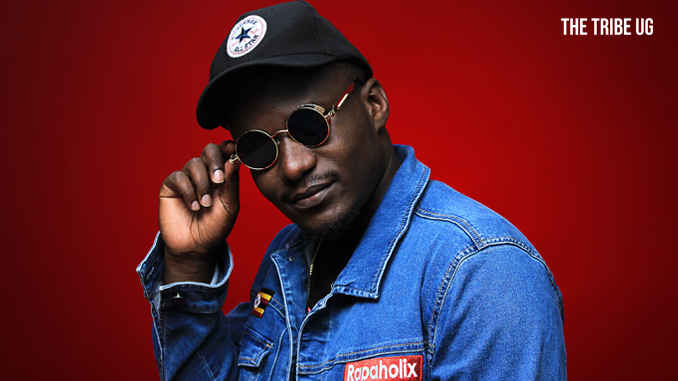
COVER STORY | FLEX D’PAPER – The Hustler

By Byaruhanga Felix (@TheNinjaFelix)
July is kicking off to be a good month for us with various projects running thus the UG Hip-Hop Awards 2018 Kicking off officially (you can submit your fire mixtape/album/song/video here) and the July issue of our recently launched magazine. As we announced, every month we will be telling Ugandan Hip-Hop stories in a more detailed way than before and this month we’re pleased to have Flex D’Paper grace our second issue. Flex D’Paper has been part of the rap industry for a minute and he has managed to diversify and build his Rapaholix brand over the years. To enable us tell his story accurately we decided to do a two part series of his interview with the first one dubbed “The Hustler” which focuses on his entrepreneurial skills in Ugandan Hip-Hop and fashion. The second part “The Leader” focuses on the music journey of the self-proclaimed Ugandan Hip-Hop New Skool leader. In this first part of the interview we discuss with Flex about his evolution from the rap into the fashion industry, challenges in a Ugandan industry and the next phase for Rapaholix as a clothing line. Apart from Rapaholix, in this issue we cover stories such as Uganda Calling: Who Got The Bars?, Twambale Apparel’s partnership with MTN Uganda & the UG Hip-Hop Awards 2018. Enjoy!

At what point did you decide to take Rapaholix from doing only music to clothing?
First of all I think the clothing came up by itself because of the music. The music is the one that created the clothing originally. The main reason why I started the clothing is that originally the clothing line was made for me personally, I made one cap one time and then I decided to make a t-shirt. I did this for a video shoot but then everyone liked them. Then everyone wanted to buy. S/O to people like Enygma, McKenzie, Mister Deejay , Dj Slick Stuart they are one of the first guys who purchased rapaholix items.
When you were crossing over from the music industry to the fashion industry with the Rapaholix brand, which challenges did you face and how did you address them?
The challenges obviously are there but remember they differ according to the country you’re in. So for us our challenges as Ugandans is the Pricing, for example I was talking to Sylvester of “Ziva Muntuyo” and the challenge he faces too is the pricing. People want quality and so to get quality you’ve to spend. If I want to get a plain hoodie, it’s going to cost me to get a quality one cause I’m not going to give you a hoodie which I’m producing at UGX 60,000 then we sell it to you at UGX 70,000. You’ll think that’s a fair price but you won’t like the product at the end of the day. It won’t be good when you start using it. A person will say they want to support you but the prices are high but then how do I give you poor quality items to create sales but in the long run lose future customers, so we got to keep our standards.
Second challenge is awareness, when it comes to fashion here in Uganda, so many people are confused; they don’t know what’s coming from Uganda & what’s not.They will barely support some Ugandan made products because the market is flooded with imported items and yet so many talented Ugandans are producing good products such as bags to shirts and more items that get exported to the rest of the world.
The third challenge is production. You can’t manufacture from here, you’ve to make items from china and they need 2000+ items per order for one item. In the long run it’s a cheaper option but not for a fashion house starting up.
How has the evolution of Rapaholix the clothing line been since December 2012 because that’s when the Rapaholix merchandise hit the market?
I think it’s the steadiest clothing line in Uganda. Let me repeat that, it’s the steadiest clothing line in Uganda. And this is not just because it’s a clothing line by an artist No, but from the reception we have got over the years. This has been seen in the distribution we have from Uganda, East Africa as well as USA and Europe. At the same time though, I salute other fashion houses pushing the culture like Alekool, Anita Berly doing clothing for the ladies, people like Sylvester, Aethan Music, Twambale among others .

Like you said the clothing line came from the music, do you find the clothing line challenged by the popularity of your music since you’re its face? By popularity I mean the reach of your music and your presence as an artist/rapper.
No. What I do is I Iet the clothing line shine on its own. I let the brand get its reach organically. The music department at Rapaholix has a whole different management from the brand. All I do is the background work. An artist can be successful musically and his clothing line grow as well. This is like Kanye West, Rihanna, Drake,Tyga etc and In Africa we have seen it with Casper, AKA, among others.
What marketing tips can you share that made the brand appeal more?
Yeah. I’ve engaged more with the buyers I ask myself what would ‘Flex put on”. What kind of shoe or jeans would I want to put on? The corporate world as well as the kids, the campus students especially MUBS and MUK because they support us a lot, they ask for new designs and that’s feedback we have acted on. So it’s very important to engage with the consumers. Redesigning and bringing new product is also another way to keep up with brand appeal.
What’s the future for rapaholix?
I’m working with a team of hard working creative, we admire the likes of Virgila Bloh of off white, among other big brands that are doing it different. Japan is like the new fashion capital and God wiling we shall be getting Rapaholix outfits to those levels of branding.













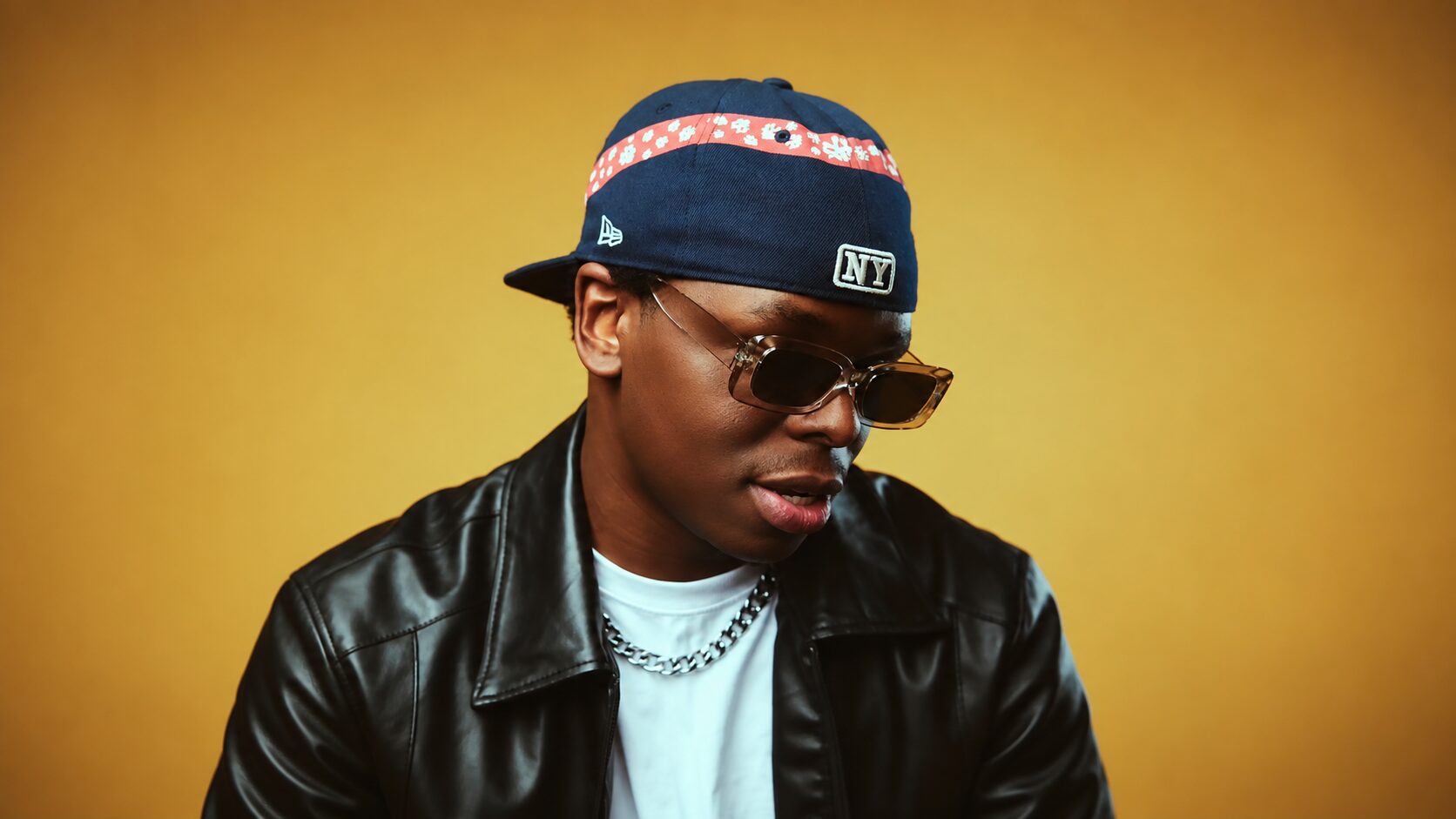
Ugandan vocalist, producer and multi-instrumentalist Kyle Simbwa has been selected as the latest artist to join Apple Music’s Up Next artist development programme in East Africa, marking another significant step in his growing career.
Originally from Kasangati, Uganda, Simbwa has steadily developed a sound shaped by a wide range of influences, from ’90s R&B and soul to ’80s synth-pop, Afrobeats and Hip-Hop. The result is a distinctive Afrobeat and Alté-inspired sound that reflects both his Ugandan roots and a broader global musical palette.
Speaking about the recognition, Simbwa described the selection as an opportunity to represent a new generation of African artists creating music on their own terms. “I want people to hear my music, feel where I’m from, and see how far it can travel,” Simbwa told Apple Music.
What makes Simbwa’s rise particularly interesting is how deeply involved he is in the entire creative process. Beyond performing, he works across songwriting, production, recording, mixing and engineering, giving him greater control over the development of his sound and creative identity.
Following the release of his debut project Person in 2025, he continued expanding his catalogue with songs including “Mwana Gwe,” “Love Me or Don’t,” and “East African Girl.” His live performance journey has also grown through headline appearances at Xpressions and performances at Afro Urban, alongside artists including Mike Kayihura and Kohen Jaycee.
In 2026, Simbwa is entering a new phase with East African Summer, a seven-track EP centred on themes of love, nightlife, freedom, movement and the experiences shaping a new generation of East African youth. The project brings together influences from Afrobeats, R&B, Hip-Hop and alternative African music, while remaining grounded in Simbwa’s Ugandan identity.
It is a project that speaks to the increasingly confident creative language coming out of East Africa, music that feels local in identity, but global in ambition.
What Apple Music Up Next Means for Kyle Simbwa
As Apple Music’s latest Up Next artist in East Africa, Simbwa will receive increased visibility through Apple Music’s Up Next platform, which spotlights emerging artists selected by Apple Music editors from around the world.
The global programme has previously featured artists who went on to become major international names, including Billie Eilish, Burna Boy, Rema, Tems, Megan Thee Stallion, Bad Bunny, H.E.R. and Daniel Caesar.
For Simbwa, the recognition adds momentum to what has already been a deliberate journey of building his catalogue, refining his sound and representing Uganda within the wider East African music conversation. And as East African music continues to gain more attention internationally, his selection is another reminder that Uganda’s new generation of artists is increasingly positioning itself for audiences far beyond the region.


Last weekend we got our visas stamped as we took a trip into the B’raka Land. After a Euro-tour through Denmark, Finland and others… All the way to a sold out show in London, the fastest rising star on the African continent came back home to Kampala to deliver an epic concert on 29th November 2025, one day after dropping his debut album, JUVIE.
In one weekend, Joshua gave us so much to unpack. So, let’s start from the Music.
We have seen Joshua evolve from projects like Baby Steps, where songs like Tewekweka exposed some of us to his talent, all the way to Watershed, which let people know and confirm that he was for real. We journeyed with him through his Growing Pains, where the continental appeal was beginning to ring true, and then he gave us Recess. Through these many projects and countless features, Joshua has showed us his talent, consistency and heavy work ethic. It was constantly Moves on Moves until we finally got JUVIE.

Right from One of One, we knew we were in for some flames, and we did not have to wait to get them because the next song on the album, Morocco, delivered all the heat and then some. The song is a Banger, and from early reviews and reactions on the socials, it is clearly a crowd favorite. Joshua immediately follows this up with Dive In, which was released earlier as a single, so we already knew that JAE5 and Joshua Baraka had given us an anthem. The project does not slow down at all, as he continues into Still Young, another early crowd favorite, which confirmed that we were four for four with eight to go!
One of the things that made the listening process epic was the sequencing. After starting with all that heat, Joshua gives us a mini interlude, before slowing down the tempo with one of my favorite songs on the Album, This Time. It is a well written song with silky melodies and smooth vocals that will definitely appeal to the fans that are into his more afro RnB side.
Joshua kept the energy going with State of My Heart, which features Kenyan sensation, Bien, which he followed it up with Wrong Places, which spent most of 2025 as the number one song on Apple Music in Uganda and was by far the most streamed song on Spotify in Uganda this year.
Joshua Baraka’s Juvie makes for a nice, smooth and simple listening session, right from the start, all the way to the final song, So Low, featuring The Compozers, which was a perfect way to close the project and leave us on a high note.

By the time we got to Ndere Cultural Center for the concert, we were pumped and ready to get right to it. Those of us who knew all his projects and collaborations were eager to see what selection of songs he had picked to sing to us. Those of us who have watched him perform multiple times in the past were eager to witness his growth on stage and to be a part of yet another chapter of his story. Overall, there was a high dose of FOMO in the air. Before Joshua even sang, the show had already hit a number of positives in my books; great price structure from the early bird to the last day – This was perfect to allow the core fans to access and afford their night out with their superstar.
Another win for me was the strategic partnerships, from Talent Africa to Bell Citrus and Mirinda– this set up the perfect vibe and energy, making the drinks and food affordable, enabling every fan to have a total blast in this economy, especially with DecemBAR loading and Kampala about to throw event after event our way. By the time Joshua jumped on stage, the crowd was fully charged and ready to go! Shout out to Joshua and his team for ticking all the boxes.
The performance was great, overall. Joshua had great song selection, and did not leave us feeling as if we’d missed out on anything. He catered to the different fan groups that were present, from the day ones to the late comers. He even delivered some extra throwback fire for the older fans too. He picked the right collaborations in A Pass, IzabelUG, BigTril, Mun G and Maurice Kirya. We were not left wanting. And for any little thing that didn’t go according to plan, I just got more excited, because it just showed that there is still room to grow, and we can only trust that he will step right in and through that room.
Keep streaming JUVIE Here
By Byaruhanga Felix (@MrByaruhanga)
Oftentimes, you read reports indicating that the creative and cultural industry is one of the fastest-growing sectors on the African continent, expanding faster than oil & gas, mining, or many traditional industries. The backdrop of such reports is made up of institutions like Nafasi Art Space: a vibrant, innovative hub for artistic exchange in Dar es Salaam.
In a nutshell, Nafasi Art Space is a home for all creatives, from visual artists, performing artists, artisans, filmmakers, poets, musicians, to fashion designers. As a first-time visitor, I immediately felt that one of the things Nafasi derives its power from is embedded right in its identity, the name “Nafasi,” a Swahili word meaning “space” or “opportunity.” On that foundation, the leadership has created a home overflowing with possibilities, a place to create, learn, inspire, and provoke conversation in society, just as true art and artists do.
This home is not only a safe space for artistic expression, but beautifully inclusive. They continue to achieve this through outstanding programs such as the Nafasi Academy, Film Club, exhibitions, residencies, digital art lab, performing arts showcases, and more.
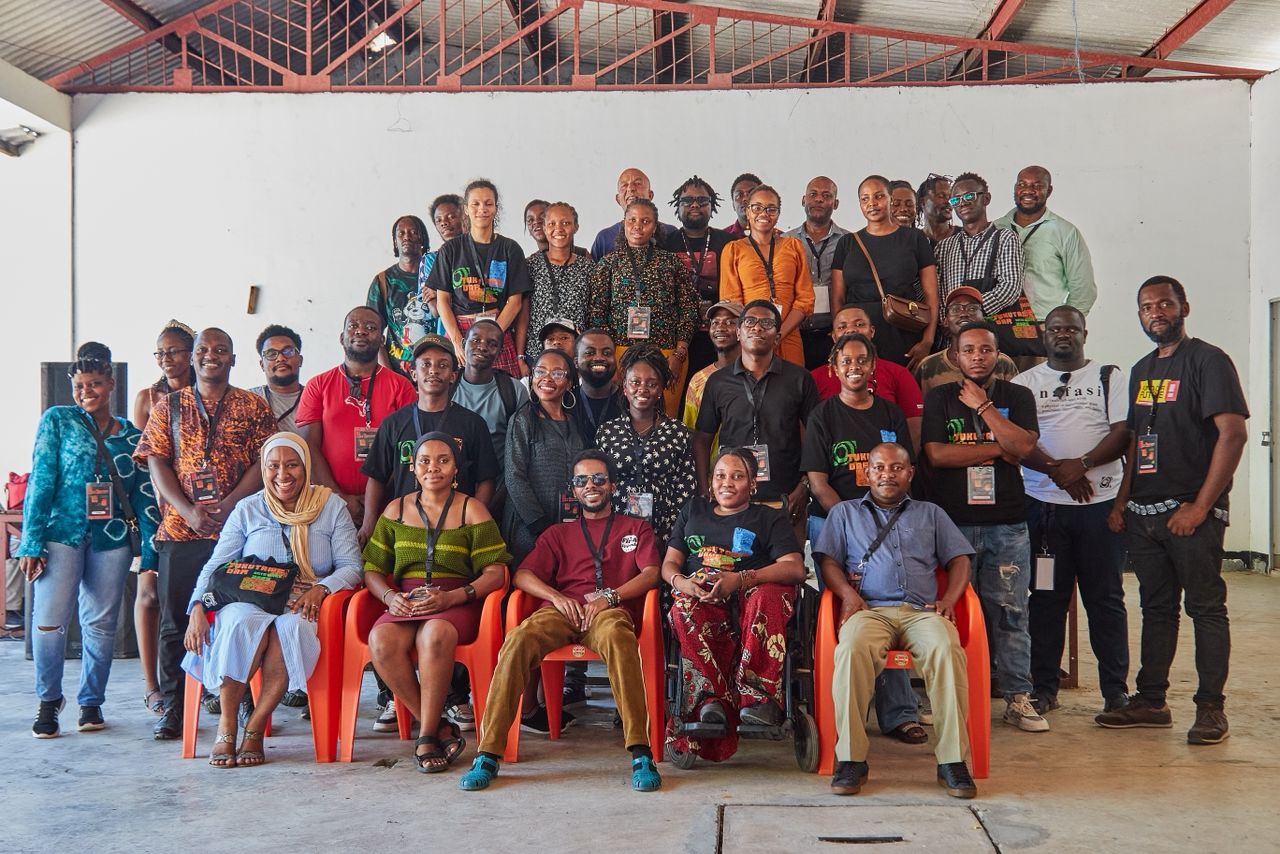
As November came to a close, Nafasi Art Space, in partnership with the Embassy of Switzerland in Tanzania and the Norwegian Embassy Dar es Salaam, hosted the 3rd edition of Tukutane Dar Arts Week under the theme: “Cross-Border Collaboration: For the CCI Sector Growth.” Tukutane was initially postponed for everyone’s safety due to post-election chaos, but with new dates confirmed (24th–30th November), more than 20 delegates from Africa and Europe converged at Nafasi to share knowledge, strengthen networks, and collaborate for a fruitful week of learning and cultural exchange.
One thing that hits you the moment you arrive at Nafasi is the energy and passion of the team behind the institution. From Fatma Mkota (Partnerships Coordinator) who welcomed and toured us around, to Gwendoline Charlotte (Marketing Manager) enthusiastically declaring, “I am here for content!”; Peter Lukumayi (Finance Manager) wearing multiple hats to ensure smooth operations; and of course Lilian Hipolyte (Director), the guiding force behind this dynamic ecosystem. Engaging with them makes it clear why Nafasi works: why the space feels like a sanctuary for creatives of every age, experience level, physical ability, gender, and discipline. This team of “Avengers” carried us throughout the week with a program that clearly took months of meticulous planning and resilience despite challenges.

Alongside this remarkable team was an equally impressive group of delegates, passionate creatives ready to contribute from their wealth of experience. Through workshops, roundtables, and hands-on sessions, we exchanged practical ideas and explored possibilities for breakthroughs across the sector.
The exhibitions highlighted milestone achievements from Nafasi programs, showing where they started, where they are now, and what the future holds. We celebrated the progress of the Film Club residency cohort, the curators graduating from the Nafasi Academy in partnership with the University of Dar es Salaam, and talented artists showcasing their evolution. The evenings were spiced with curated showcases, cooling down the Dar heat while heating up vibrant dialogue, from panels on building communities in film and fashion, to a delicious Swahili food experience.
These were spaces created by artists for artists, and the audience engagement made that clear. Views were shared openly, disagreements turned into progressive debate, and ideas translated into art in real-time. Some of these memorable expressions were immortalized through live graphic commentary by Nathan Mpangala (cartoonist & illustrator), now proudly featured on Nafasi’s social pages.

As Tukutane Dar wrapped up, we were treated to a powerful closing event where over 80 artists took the stage, a testament to Nafasi’s impact in nurturing and amplifying talent. Performances included legendary Tanzanian acts and rising stars alike, while artisans showcased and sold work crafted during their time in the Nafasi community. It was a clear demonstration of a thriving alumni ecosystem, one that continues to enrich the creative economy long beyond a residency or program.
From start to finish, Tukutane Dar Arts Week 2025 was a reflection of what happens when space meets opportunity, when creativity meets community, when collaboration crosses borders.
I return home inspired, hopeful, and eager to contribute to the continued growth of our continental creative ecosystems.
Looking forward to celebrating the successes of Tukutane Dar 2025, again, in 2027.


Kyle Simbwa Named Apple Music’s Latest Up Next Artist in East Africa

REVIEW: Sincerely AfriKane The EP

INTO THE B’RAKA LAND

Tukutane Dar 2025: How Nafasi Art Space is Powering Africa’s Creative Economy

Apply Now: Koola Kampala Business Incubation Programme for Creative Entrepreneurs in Uganda.

Mitch Isabirye on Poetry, Collaboration, and Culture: The Story Behind ‘Poetry in Motion EP’

Maritza on Breaking Continental Barriers with Spoken Word EP ‘Poetry in Motion’

Kohen Jaycee’s ‘Gundeze’: A Soulful Anthem of Love.

On the Move by Denesi: A Powerful Anthem of Hustle and Ambition

Reviving Nostalgia: Akeine and Henry Tigan’s “Out of Control” Remix.

WATCH: The Tribe UG On Urban Today.

Elevate Your Music Career: Join AUMEX’s Essential Branding and Marketing Masterclass

REVIEW: Kaboo ft. Tai Dai & Soundlykbb – Thursday

VIDEO REVIEW: Navio – Mad.

Afro B Unleashes Cross-Continental Vibes in New Single & Video ‘Wo Wo Wo (Ebony)’

REVIEW: “Heart Strings” EP by Kohen Jaycee x Axon

Angell Mutoni Drops Bold New Single “Kare” Ahead of Debut Album

KJ Spio, Harmonize & Konshens Unite for ‘Messi

Brian Babu and Regalia Apparel Launch Unisex ‘Uwili’ Capsule Collection

REVIEW: “Prolific” EP by MooTowNoh
REVIEW: Kaboo ft. Tai Dai & Soundlykbb – Thursday
VIDEO REVIEW: Navio – Mad.

VIDEO: Afrie – Balongo (Live)

VIDEO: Nkomyewo – Bana Mutibwa

The Tribe UG: Press Play | Break – The Homie
REVIEW: “Heart Strings” EP by Kohen Jaycee x Axon
REVIEW: “Prolific” EP by MooTowNoh

The Tribe UG: Press Play | Wake ft. Mal-X, Tucker HD, and Flex D’Paper – FLEX

The Tribe UG: PRESS PLAY | Pound Or Shilling